Sustainability
Designing a temple is an act of countless choices. Every decision, from the shape of a beam to the source of a piece of timber, becomes part of the story the structure tells. Sustainability has been one of the principles guiding those choices from the very beginning. That commitment runs through every stage of the project, from the materials we build with and the way we transport the Temple, to the renewable energy that powers its construction and the systems that support life in the Temple Camp.
Material sourcing
Much of a building’s environmental impact is determined long before it is assembled on the playa. It begins with the materials themselves, where they come from, and the lives they have already lived.
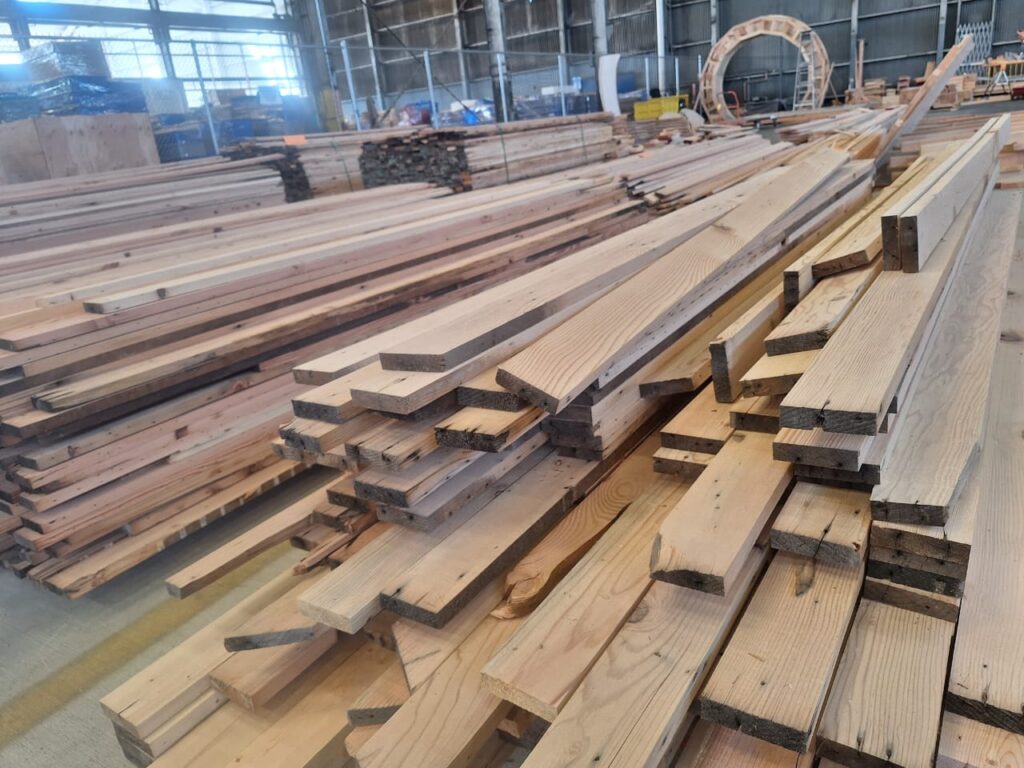
For the Temple of the Moon, every piece of exterior cladding has been crafted from reclaimed wood, representing nearly half of the lumber used throughout the structure. More than 80,000 feet of timber was carefully salvaged from a mid-century lake estate and a 150-year-old industrial building in Milwaukee. Rather than being demolished and sent to landfill, these buildings were thoughtfully dismantled, allowing their materials to begin a new chapter.
There is something deeply fitting about giving old wood a second life in a place devoted to remembrance. Timber that has already sheltered generations of people will now become a space where thousands gather to reflect, to grieve, to celebrate, and to let go.
This choice also carries an environmental benefit. By reclaiming and reusing these materials, we are reducing the need for newly harvested timber.
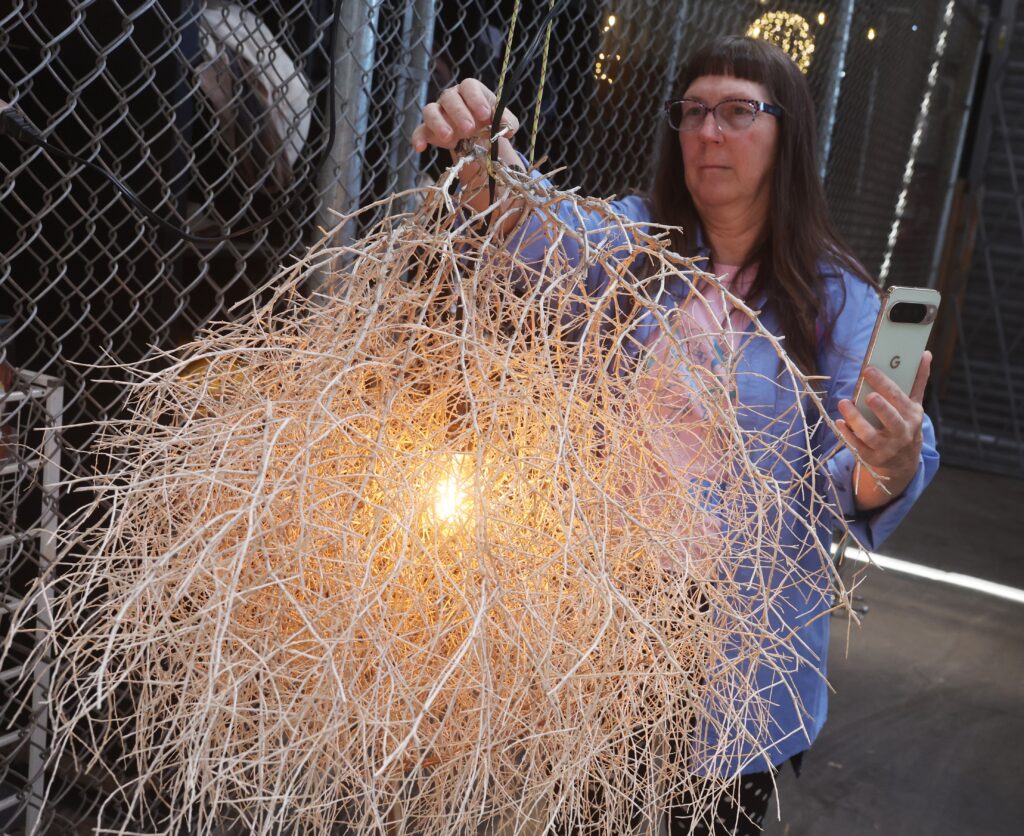
The same philosophy extends to many of the Temple’s smaller details. Decorative elements, including the light shades and cushions, are being created from salvaged and recycled materials wherever possible. For our crowdfunder rewards, we have chosen art sourced from independent, burner artists, meaningful offerings that avoid unnecessary consumption. These may be quiet decisions, largely invisible to those who visit, but they reflect a simple belief: that beauty and care need not come at the expense of the world that makes gatherings like this possible.
Transportation
The journey to the playa is also part of the Temple’s story. Every mile traveled carries an impact, and thoughtful planning can make a meaningful difference.
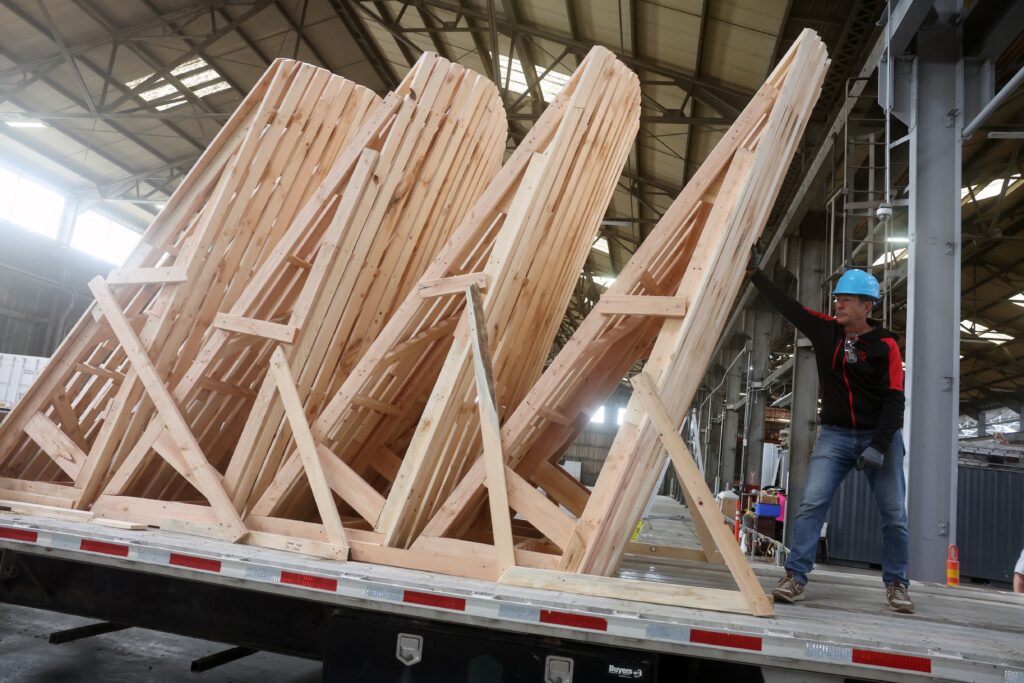
Our build site was intentionally chosen in the Bay Area, where many members of the team already live and where public transit is readily accessible. By building close to our community, we can reduce unnecessary travel while making it easier for volunteers to walk, bike, take transit, or share rides to the workshop.
The same care extends to the Temple’s journey to Black Rock City. We are carefully planning our transportation logistics to make the most efficient use of every vehicle, reducing the number of trips required to bring the Temple and its materials to the playa.
These choices may never be visible in the finished structure, but they are part of the foundation on which it stands. They reflect a belief that caring for one another also means caring for the landscapes that hold us, both on the playa and far beyond it.
Solar Power
Building in one of the world’s most remote temporary cities has traditionally depended on generators and fossil fuels, but that is beginning to change.
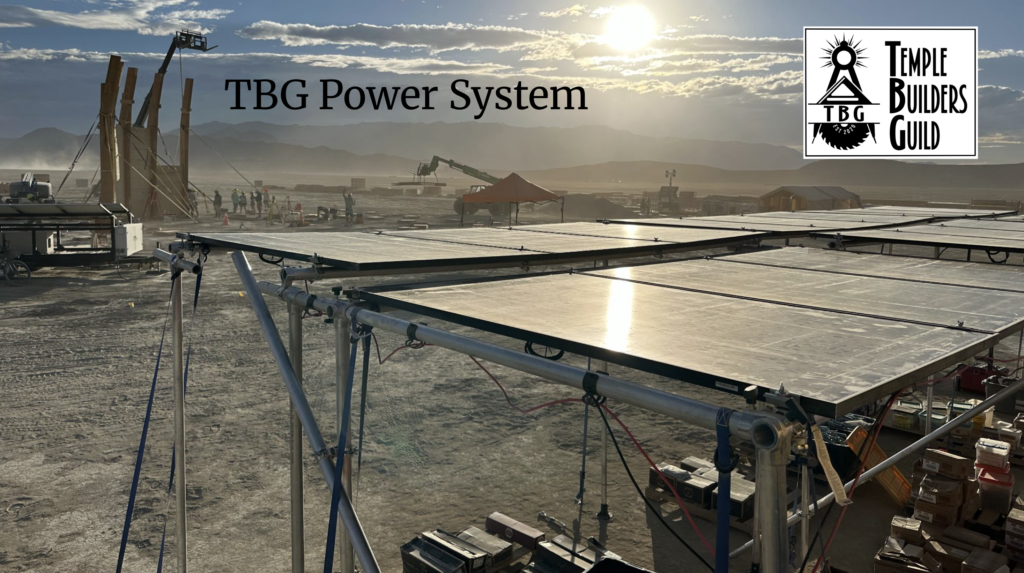
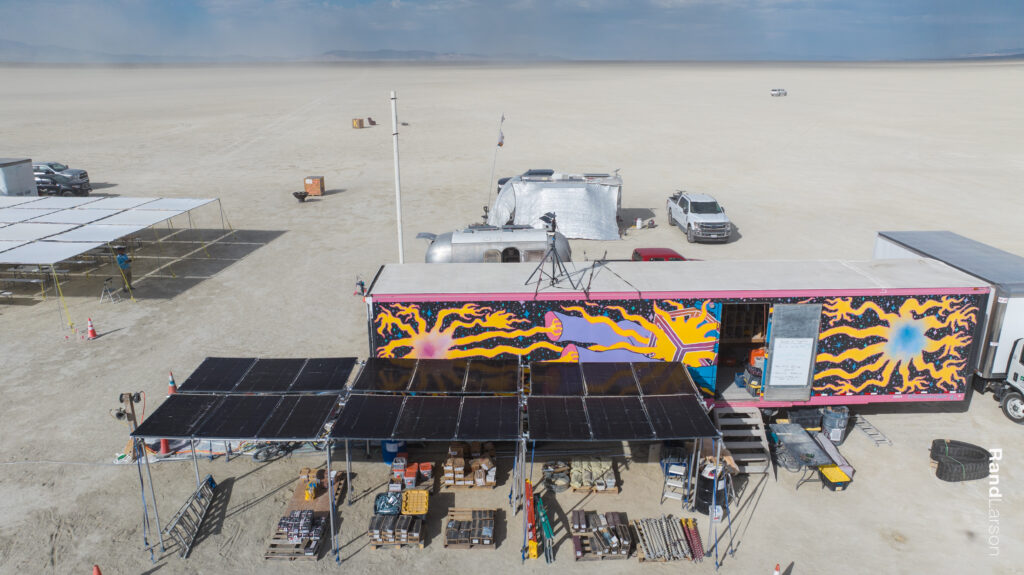
Our goal is for the Temple build to be powered entirely by solar energy. We will use renewable power – the Unicorn solar array – to support construction while minimizing the need for diesel generators and other fossil fuel-powered equipment wherever possible.
The Unicorn solar array is one of several community-led renewable energy projects transforming the playa. Throughout the year, a dedicated team of volunteer engineers works with artists, theme camps, and the Burning Man community to replace diesel generators with solar power, battery storage, and resilient microgrids. Their work often happens quietly, behind the scenes, but it is helping to imagine a future where even a city that exists for only a single week can leave a lighter footprint.
Temple Camp
The Temple camp is also home to the community that gathers to build it. The choices we make in our camp are another opportunity to live the values we hope the Temple embodies.
The Temple Crew will have its own dedicated kitchen, powered entirely by solar energy. By preparing meals together in one shared space, we can reduce the use of propane and butane while creating something equally valuable: a daily ritual of gathering, nourishing one another, and strengthening the community that brings the Temple to life.
Composting will be an integral part of camp life, helping to reduce food waste while keeping organic material out of landfill, where it can contribute to methane emissions. Like many sustainable practices, composting is ultimately an act of care, recognizing that even what we discard deserves thoughtful attention.
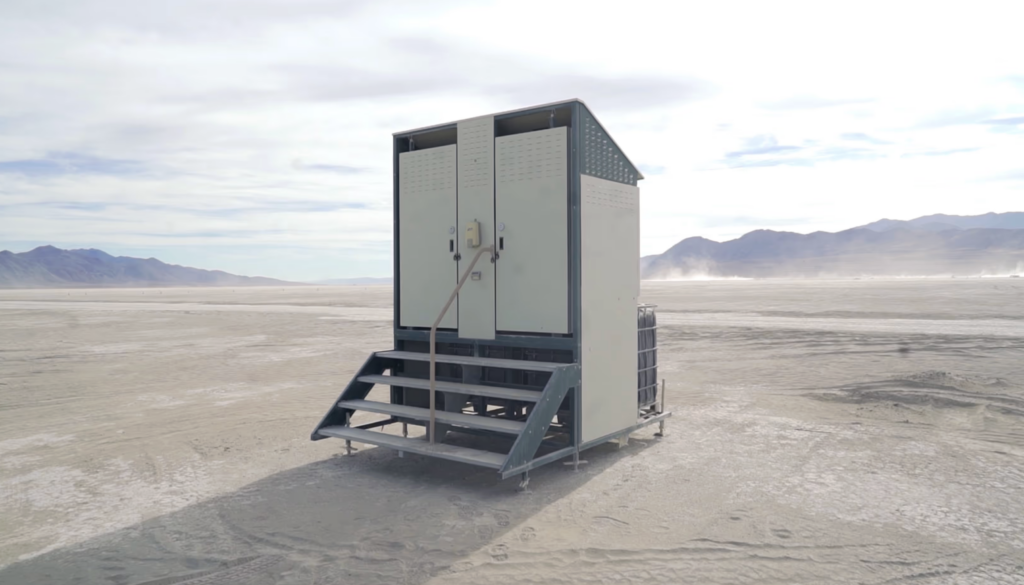
Our camp will also include Ecozoic composting toilets, helping to reduce methane emissions while demonstrating new approaches to sanitation that use fewer resources than conventional systems.
Water, too, is something we hope to treat with intention. A reverse osmosis water recycling system will allow us to reclaim water from showers and handwashing, reducing overall water consumption and reminding us that even in the desert, every drop has value.