Inspiration
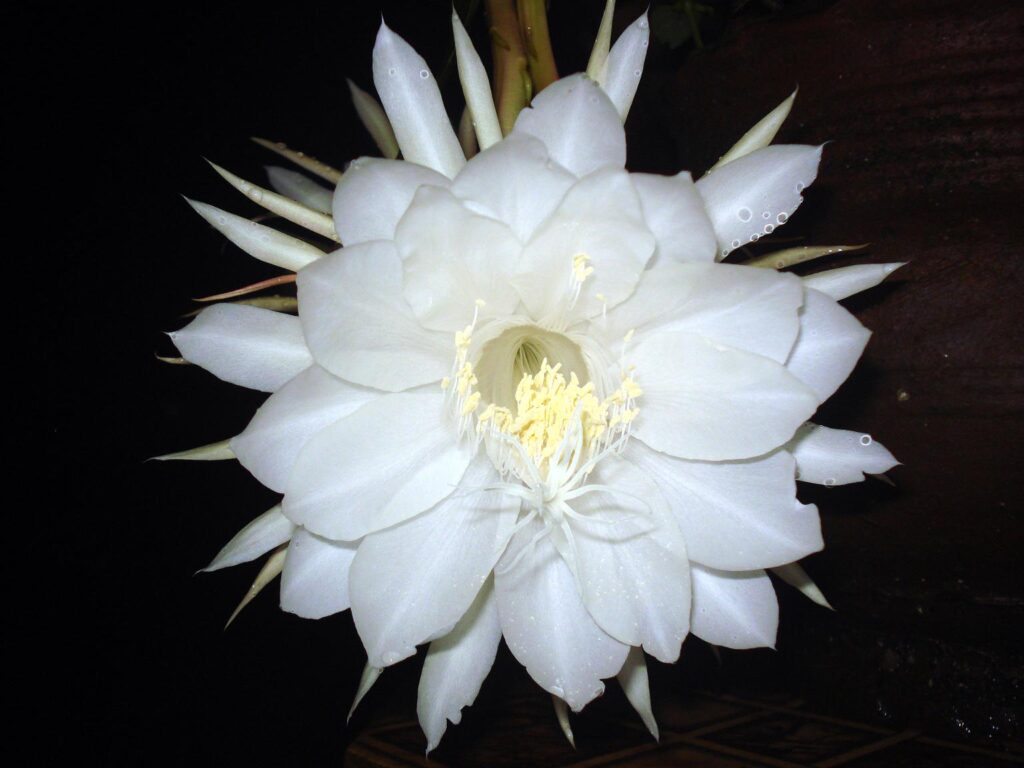
The Temple of the Moon is inspired by the Queen of the Night flower, a fragrant desert cactus blossom (Epiphyllum oxypetalum) which blooms only once each year, at night, and whose flowers wilt before dawn. In this act of ephemeral beauty, we find a profound metaphor for our own brief beautiful lives on this planet, as well as for Burning Man itself, which blossoms each year in the dust of the playa, and then disappears without a trace.
We believe that this act of impermanence demands presence. The flower blooms for only a few hours. If you blink, you will miss it. The only possible response is to slow down, to be as present as possible, and to witness.
And that is what we are most trying to capture in the design for this temple: presence. In a world that feels increasingly fast and relentless, the temple offers a quieter counterpoint. A place to slow down, to be with what is here, and to hold space for one another without needing to change a thing.
The Design
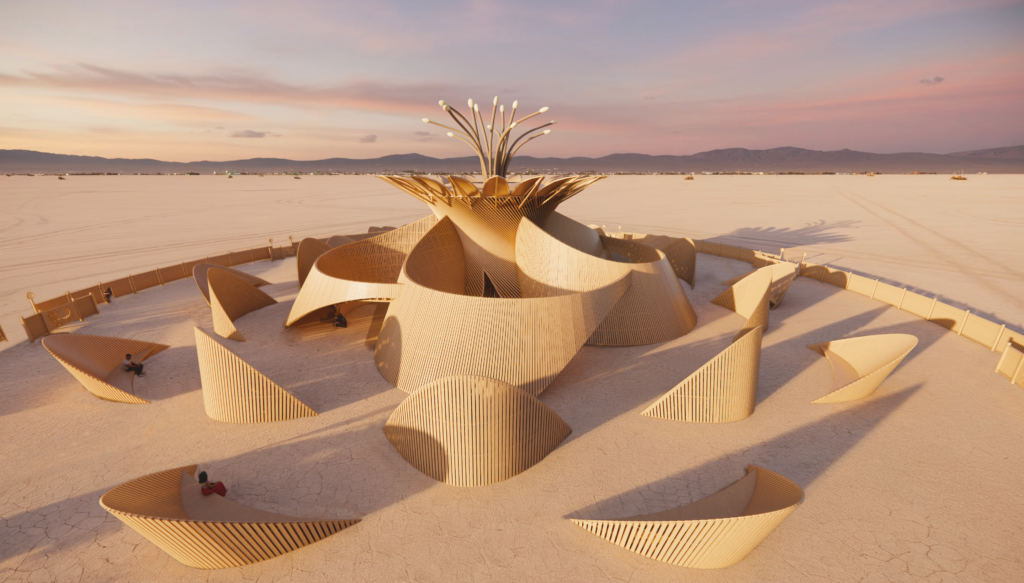
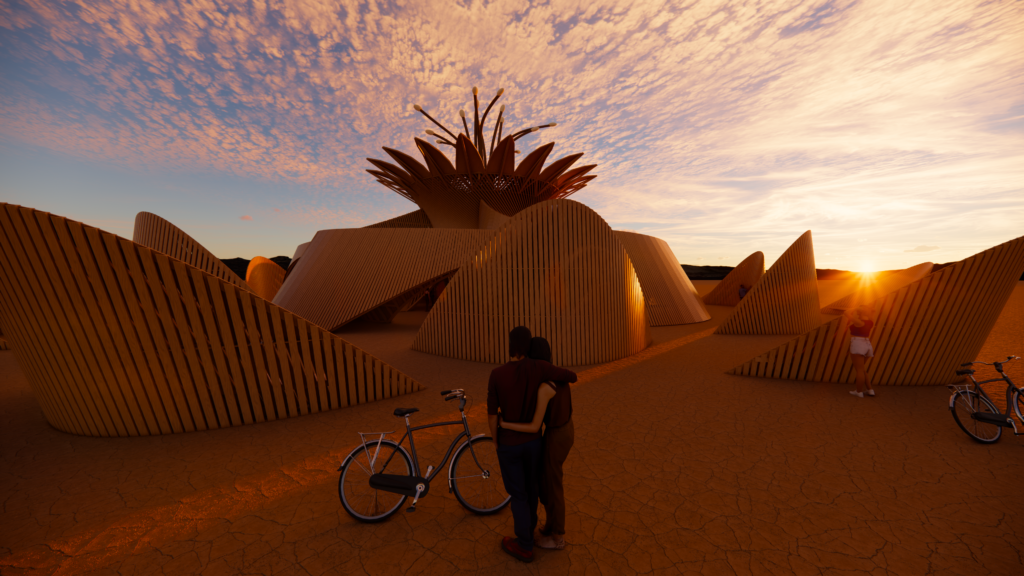
The design for the temple is organic and inward-folding. At its heart is a single tower, 30 feet tall, that provides a communal space for gathering.
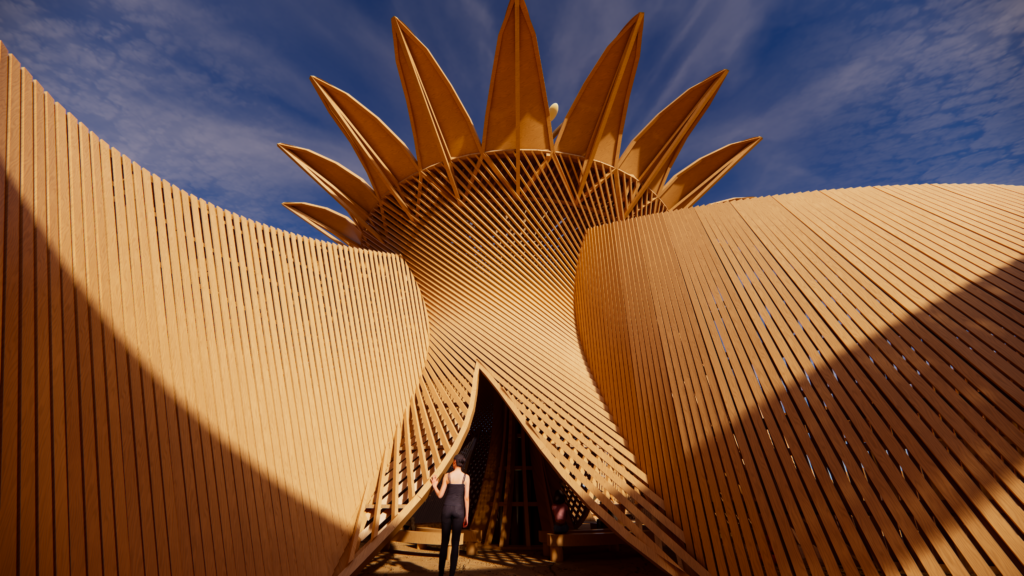
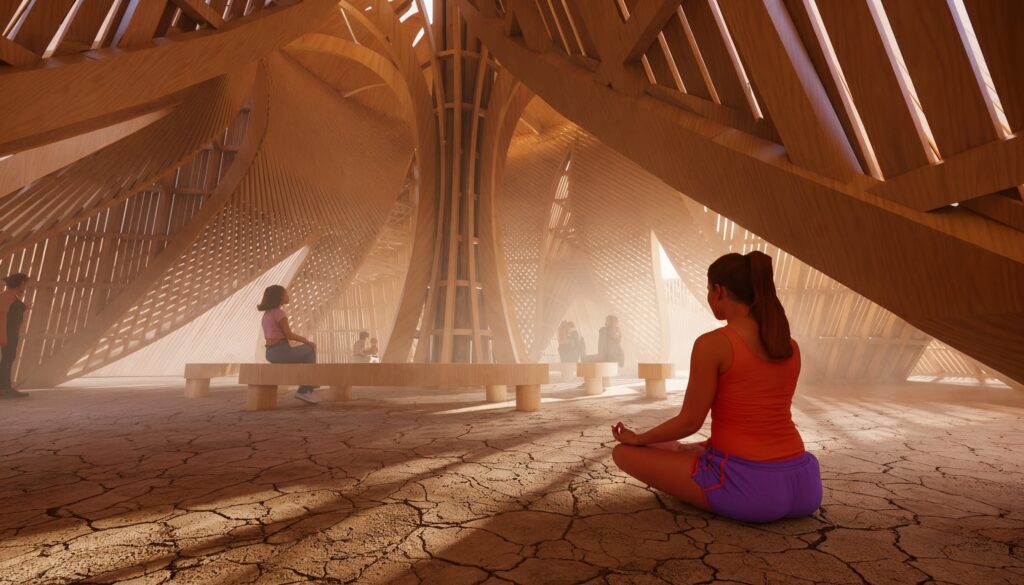
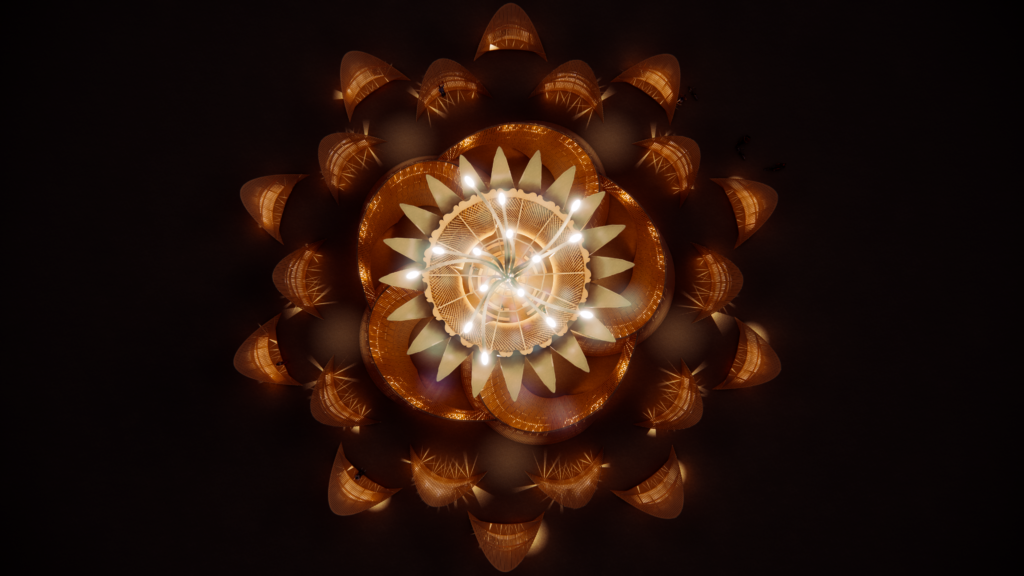
The tower is crowned by a set of petals, that will hinge open each evening and close again each morning, offering a sense of ritual, and embracing the inspiration of the flower itself. Below you can see the view of the tower, looking upwards, showing the petals closed during the day, providing shade from the playa sun. Once night falls upon the Temple, the ceiling petals will ceremonially bloom to reveal the sky above.
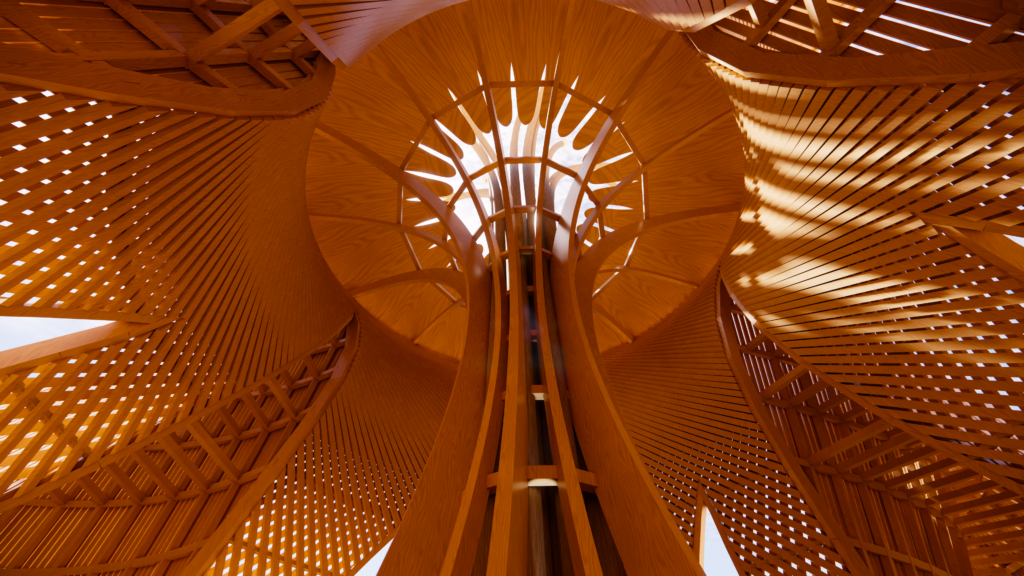
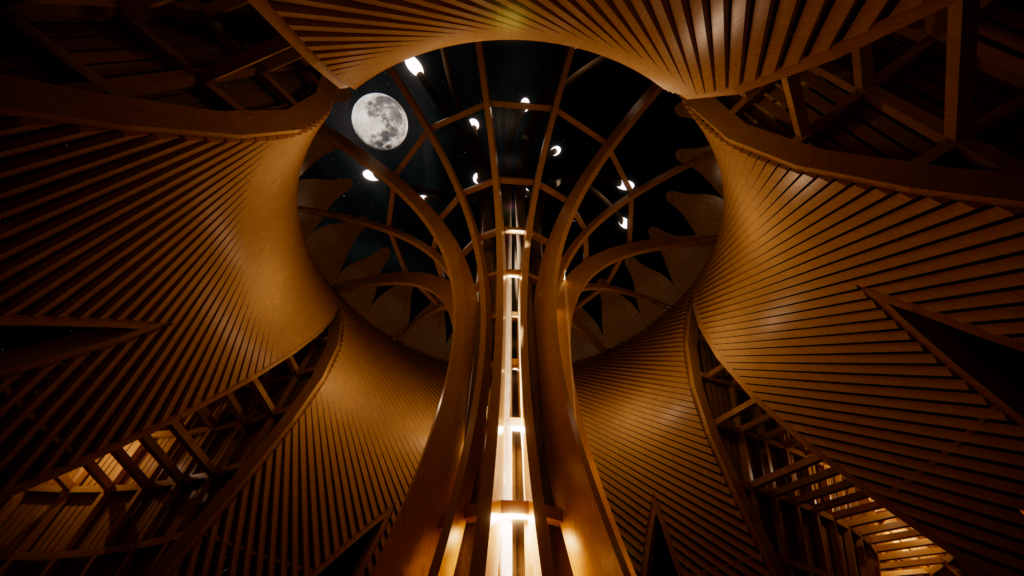
Rising up the center of the tower is a tree-like structure inspired by the stamen of the flower. These reach up to 50 feet into the air, and will glow at night, providing a welcoming beacon that can be seen from far across the playa.
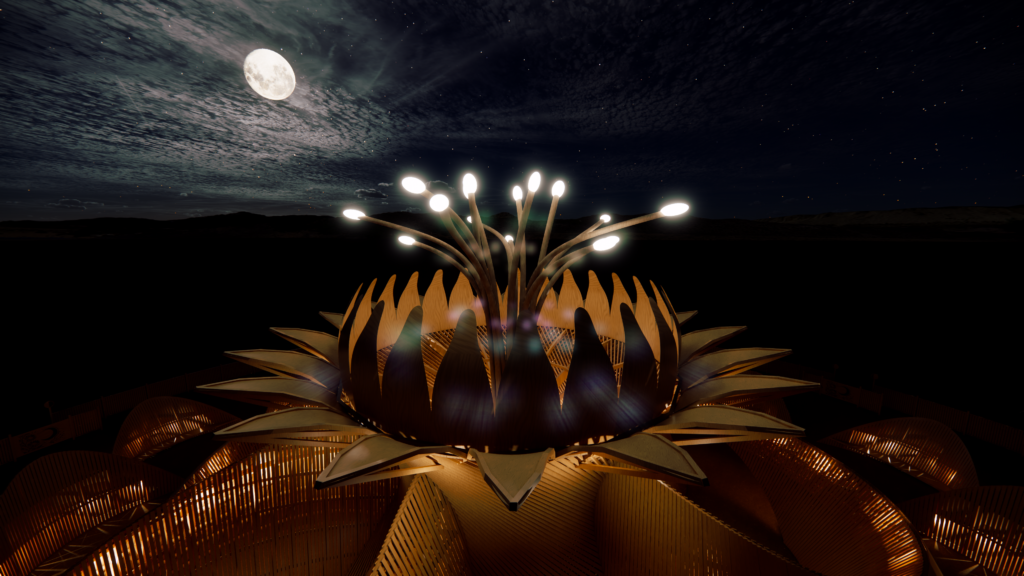
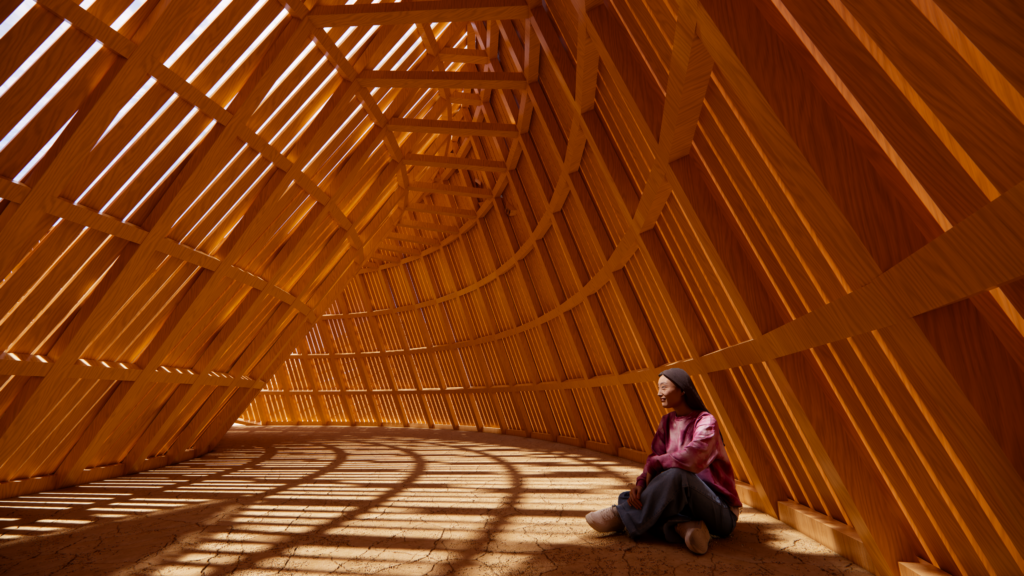
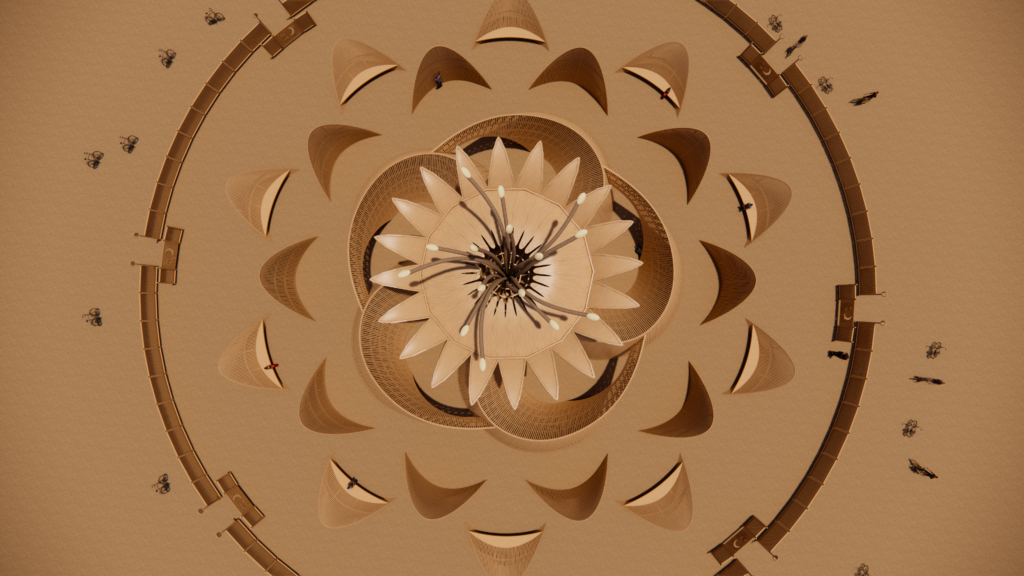
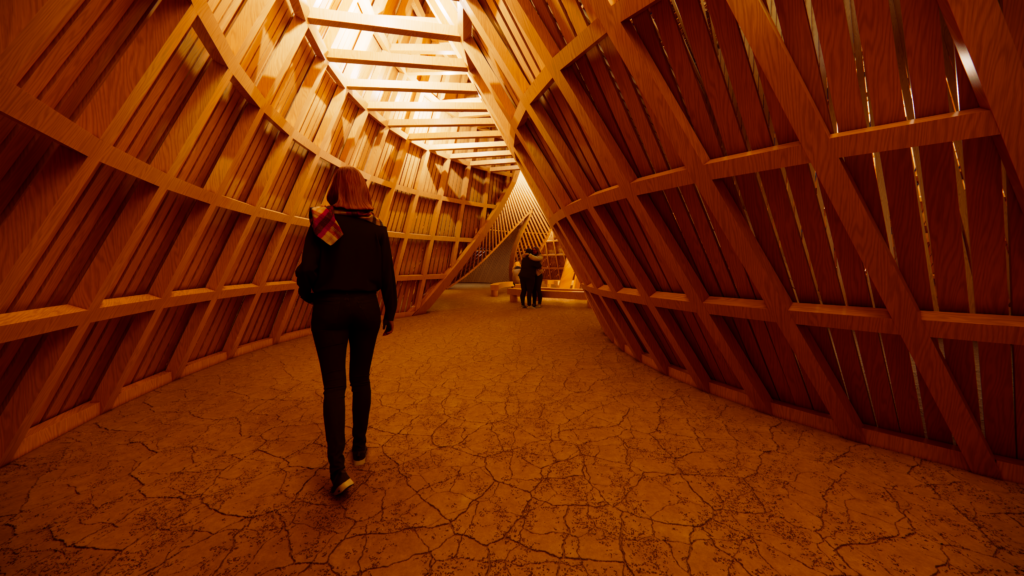
Curving off the central tower are five arms that extend outward, ultimately folding back on themselves, and offering more intimate spaces for reflection and offerings.
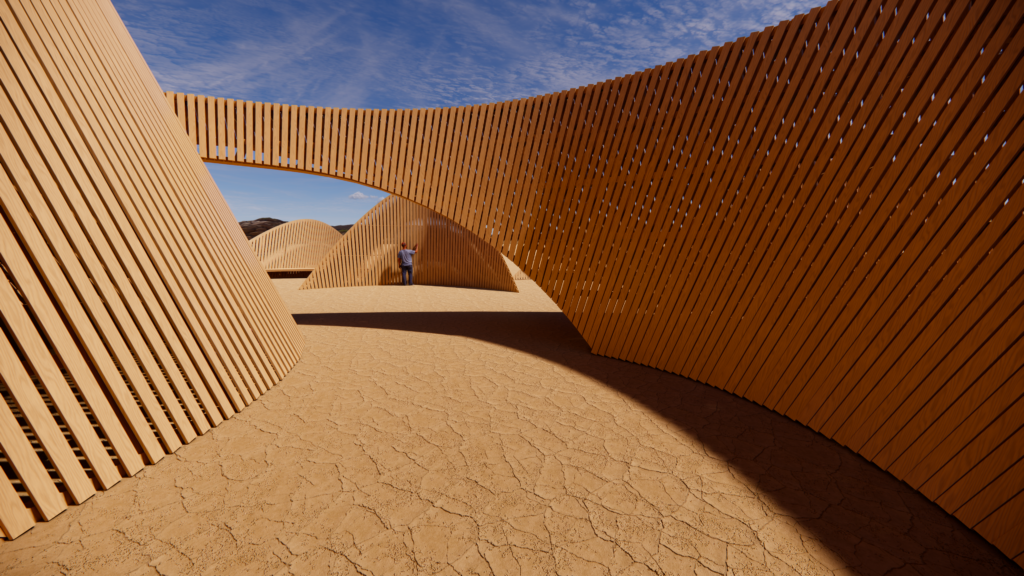
Outside the central structure are 20 free-standing petals. These are placed such that visitors cannot take a direct line straight to the temple, but instead access it via an indirect, deflected approach, that unfolds through successive turns between the enclosing walls of the outer petals of the flower.
This approach is inspired by the large sculptures of Richard Serra. It behaves in part like a Serra corridor, compressing the body between planes, bending the line of travel, and slowing the visitor down so they arrive at the temple with an increased sense of presence and shifted sense of time.
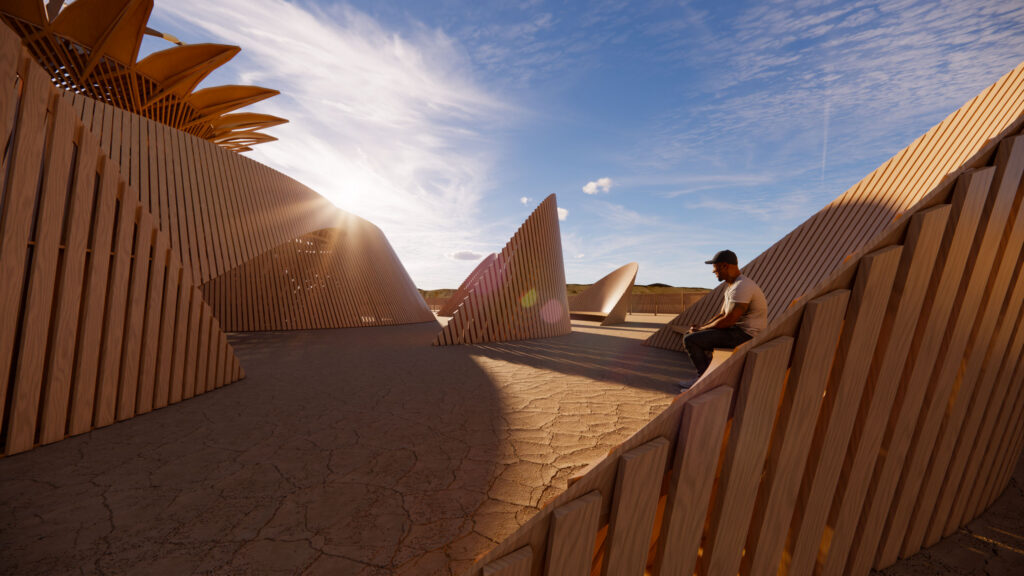
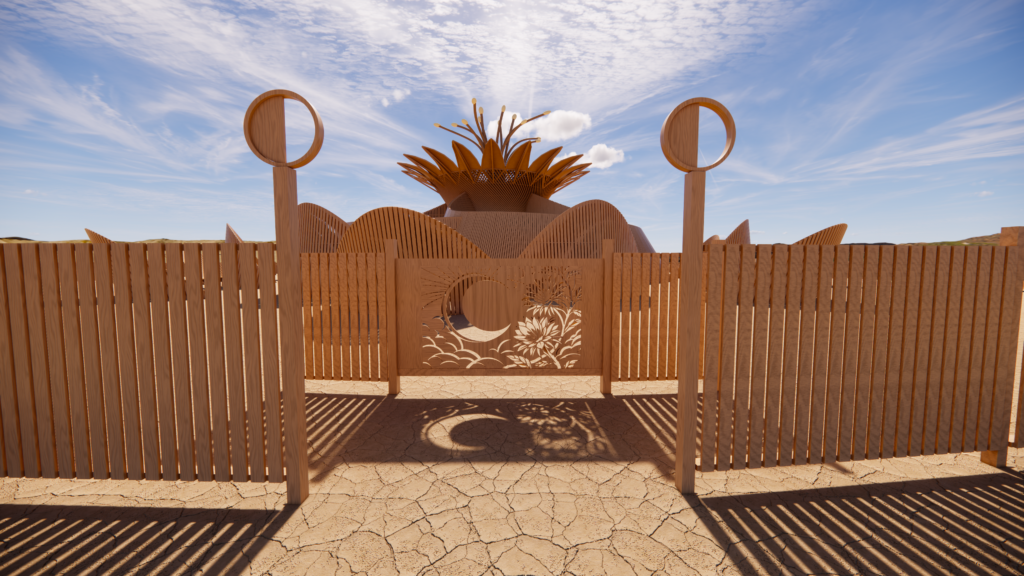
The Temple is set apart from Burning Man by a fence, 220 feet in diameter. Set into the fence are eight gates, each corresponding to a different phase of the moon.
Each gate will also have a piece of artwork that we hope to have contributed from the community. We will be sending out a call for contribution later this year in which we will ask for submissions to be cut out of a sheet of wood and set within each gate.
The Design process
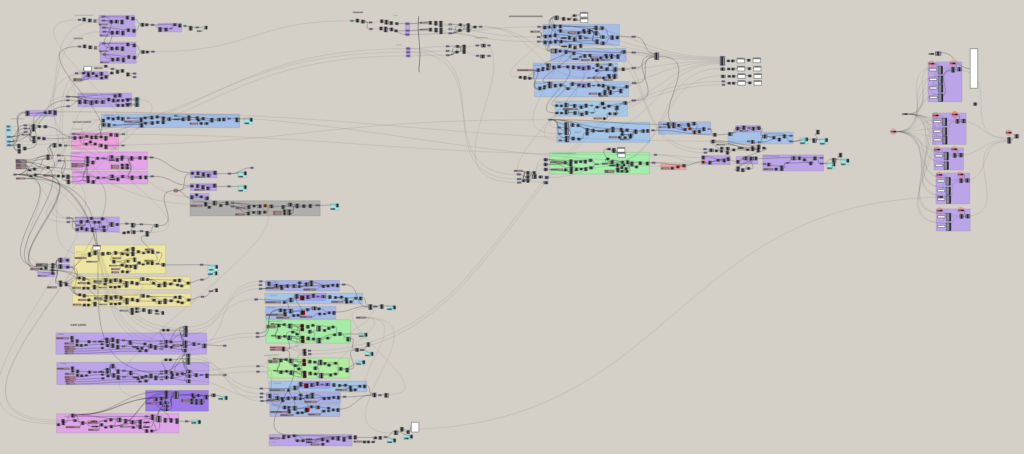
This organic form was developed through parametric workflows, shifting the design process from manual drafting to algorithmic generation. By defining a logic-based system of constraints and relationships, the timber assembly emerged through iterative computation rather than static placement.
The accompanying screengrab illustrates the Grasshopper definition – the generative logic behind the Temple of the Moon. All visualizations were produced using Enscape for real-time rendering.
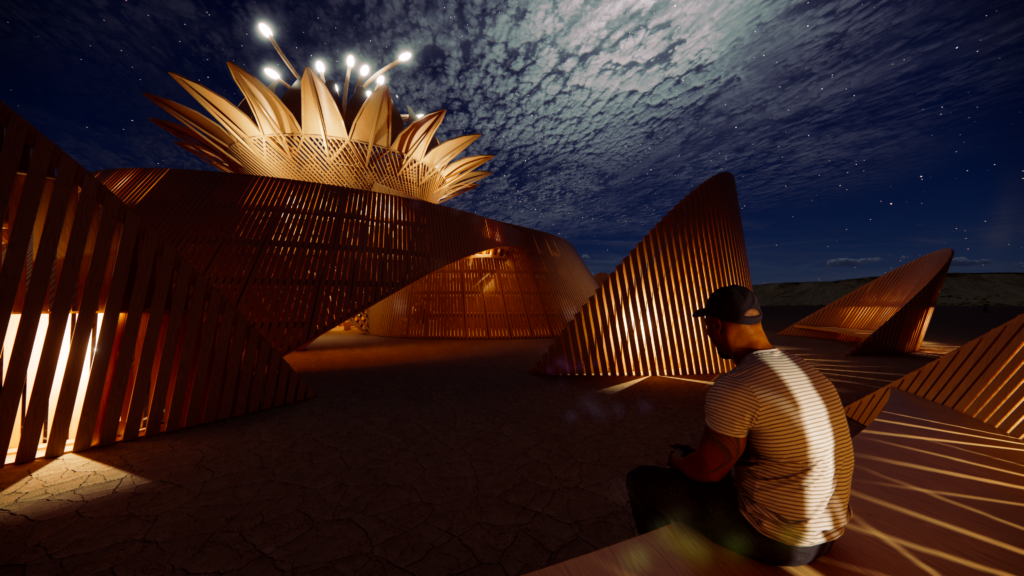
Renderings by James Gwertzman & Annie Locke Scherer